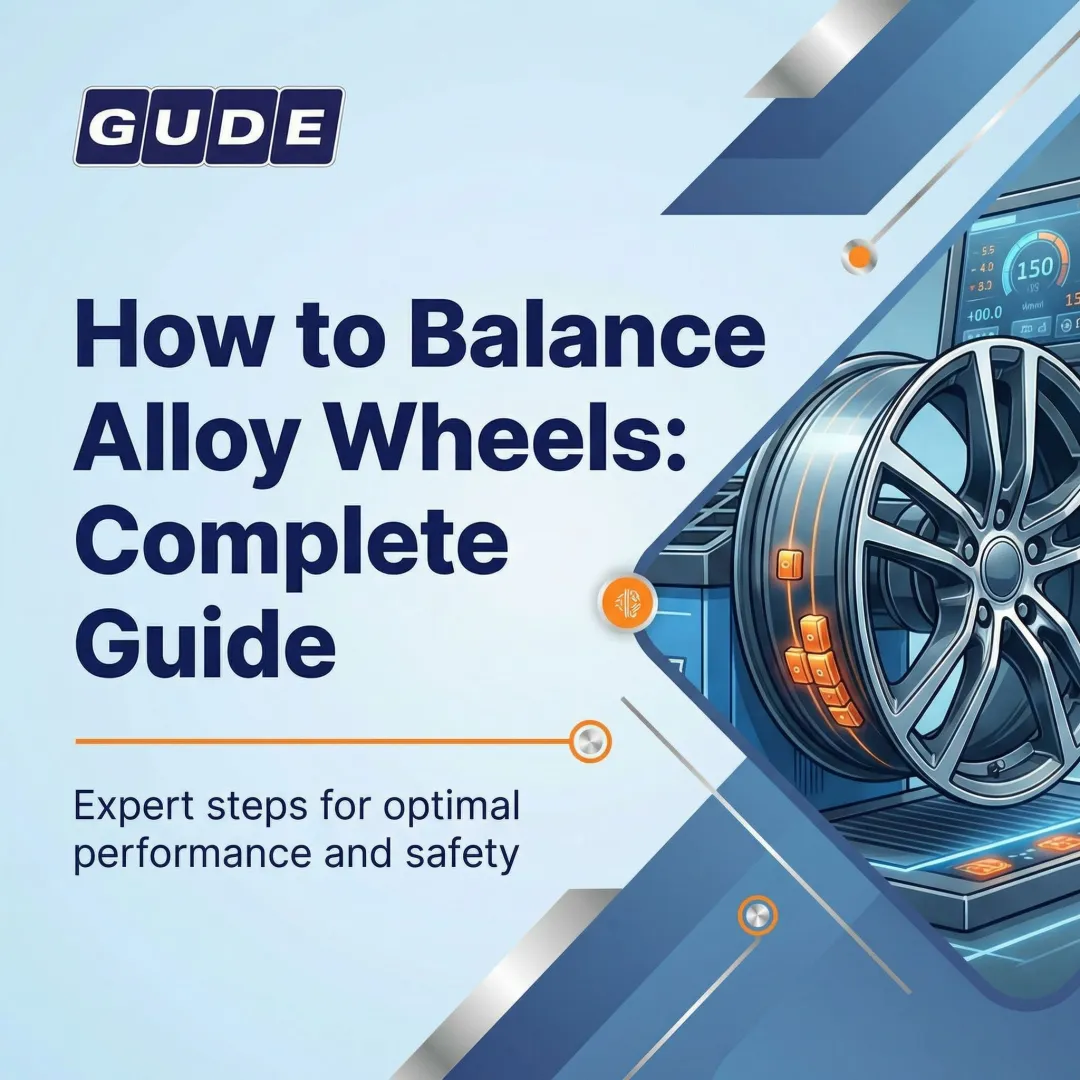

This guide covers why alloy wheels need balancing, how the process works, warning signs to watch for, the right types of weights to use on alloys, and how often to schedule a balance check.
TL;DR
- All wheels, including alloy wheels, need balancing every time a new tire is fitted and periodically throughout their lifespan
- An unbalanced alloy wheel causes vibration, uneven tyre wear, and extra strain on steering and suspension components
- Common warning signs include a vibrating steering wheel, pulling to one side, and faster-than-expected tyre wear
- Adhesive (stick-on) wheel weights are the standard choice for alloy wheels to protect the rim's finish
- Rebalance every 5,000–7,500 miles, after hitting a significant pothole, or whenever new tires are fitted
Why Do Alloy Wheels Need Balancing?
No wheel and tyre assembly is perfectly uniform in weight. Minor inconsistencies come from the valve stem hole, variations in tyre construction, and slight deviations in rim shape. At high speeds, even a small imbalance creates a large centrifugal force imbalance.
A mere 0.25 oz imbalance generates approximately 3.47 lbf of centrifugal force at 60 mph, and 4.73 lbf at 70 mph. This constant hammering against the pavement causes the wheel to bounce, accelerating tire wear and fatiguing suspension components.
Alloy wheels follow the same physics. Their precision engineering and spoke designs create complex weight distribution patterns that make accurate balancing just as critical as on steel wheels. And because alloys are stiffer than stamped steel, they transfer vibrations more directly to the chassis — meaning imbalance is felt more acutely.
The Cascade Effect of Imbalance
Unbalanced wheels trigger a destructive chain reaction:
- Vibration — felt through the steering wheel, seat, or floorboard
- Accelerated tire wear — uneven contact creates scalloped or cupped wear patterns
- Stress on wheel bearings — constant hammering fatigues bearings and bushings
- Suspension damage — shock absorbers and struts wear prematurely
- Costlier repairs — preventive balancing costs far less than reactive suspension replacement
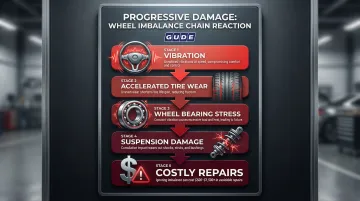
While a standard balance costs $10–$15 per wheel, neglecting it leads to wheel bearing replacement at $343–$504 or shock/strut replacement at $1,057–$1,260. Investing $80–$160 in a four-wheel road force balance prevents thousands of dollars in suspension failure down the road.
Safety and Performance Impact
An unbalanced wheel doesn't maintain full, consistent road contact — particularly at highway speeds. This compromises braking distances, handling precision, and driver alertness over long distances. Proper balance keeps all four tires in even contact with the road, which is the baseline for safe braking and cornering at speed.
How Does Wheel Balancing Work?
Balancing involves mounting the wheel and tyre assembly onto a specialized balancing machine that spins it at high speed, identifies the heaviest point, and instructs the technician where and how much counterweight to add on the opposite side. Two methods are used depending on the vehicle type and the severity of the imbalance.
Traditional Spin Balancing
In traditional spin balancing, the wheel is centered on a balancer spindle via the hub bore and a metal cone, then spun at speed. The machine calculates both the location and mass of weight needed to achieve equilibrium. This is the standard method used in most tire shops and handles the majority of passenger vehicles with alloy wheels.
It measures two types of imbalance:
- Static imbalance — up-and-down movement in a single plane
- Dynamic imbalance — side-to-side wobble requiring weights on both the inner and outer planes of the wheel
Important limitation: Traditional spin balancing only corrects weight differences — it cannot fix a physically bent wheel or an out-of-round tyre. If vibration persists after balancing, inspect for a bent rim or out-of-round tyre before rebalancing.
Road Force Balancing
Road force balancing goes beyond standard spin balancing by using a large roller pressed against the spinning tyre to simulate road contact. This process applies up to 1,400 lbs of force to detect issues like belt separations, radial runout — where the tyre deviates from perfect roundness — and match-mounting problems that a standard spin balance cannot identify.
Match mounting is a key advantage of road force balancing. The machine identifies the tyre's high spot and the wheel's low spot, then guides the technician to align them — reducing the weight needed and producing a smoother result.
Road force balancing is highly recommended for:
- High-performance vehicles
- Low-profile tyres
- Large-diameter alloy wheels
- Persistent vibration cases that standard balancing doesn't resolve
Signs Your Alloy Wheels Need Balancing
Wheel imbalance rarely announces itself all at once. The symptoms build gradually — but once you know what to look for, they're hard to miss.
Vibration Through the Steering Wheel or Floorboard
A rhythmic vibration felt through the steering wheel — typically appearing or worsening at 50–70 mph — is the most recognizable sign of front wheel imbalance. Vibration felt through the seat or floorboard often indicates rear wheel imbalance.
What starts as a faint shimmy at highway speeds can escalate into noticeable shaking that stresses wheel bearings and strut components. Catching it early — before uneven wear sets in — avoids compounding repair costs.
Uneven or Accelerated Tyre Wear
An unbalanced wheel causes the tyre to contact the road inconsistently — creating scalloped, cupped, or patchy wear patterns across the tread rather than even wear across the full contact surface. Neglected imbalance can reduce tyre life by up to 20%, or cause tyres to wear up to 3x faster in severe cases.
Uneven wear is sometimes the only visible indicator of imbalance — especially on vehicles with stiffer suspension that absorbs vibration before it reaches the driver. Cupping along the tread edge is a reliable tell.
Worsening Fuel Economy
Increased rolling resistance caused by an unbalanced tyre assembly forces the engine to work harder to maintain speed, resulting in measurable fuel consumption increases. Imbalanced assemblies can decrease fuel efficiency by 1–2%, — enough to cost an extra tank of fuel or more over a typical 15,000-mile driving year.
How to Choose the Right Wheel Weights for Alloy Rims
Weight type matters specifically for alloy wheels. Steel rims can handle clip-on (hammer-on) weights without issue, but alloys are vulnerable — the clamping force and edge placement can chip the finish, scratch the surface, or cause stress fractures. Adhesive (stick-on) weights are the industry-standard choice for alloy rims.
Clip-On vs. Stick-On Weights
The choice between the two comes down to rim material and finish type:
- Clip-on weights install faster and work well on steel rims, but the hammering action damages clearcoat and paint on alloys — leading to galvanic corrosion and eventual air leaks at the bead
- Stick-on weights mount to the inner barrel behind the spokes, staying invisible from the outside and avoiding direct contact with the alloy surface
- Surface prep matters — clean the adhesion area of brake dust and grease before applying stick-on weights, or bond strength drops significantly
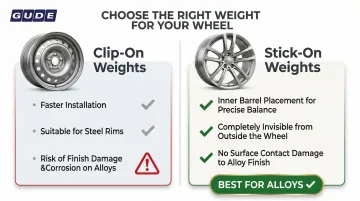
Well-engineered adhesive weights are built to withstand heat cycling, moisture, and the mechanical stresses of road use. ISO 13988:2021 specifies test procedures and performance requirements for adhesive balance weights on passenger cars, ensuring they perform safely throughout the vehicle's lifespan.
Exception: Some manufacturers offer low-profile clip-on weights specifically engineered for alloy wheel rim flange geometry. These specialized designs minimize visibility and reduce the risk of finish damage, but adhesive weights remain the better choice for alloy wheels in general.
Material and Environmental Considerations
Traditional lead wheel weights are being phased out globally due to environmental and health concerns. When lead weights fall off vehicles, they grind into dust that contaminates soil and stormwater — a recognized public health hazard.
Global lead phase-out timeline:
| Jurisdiction | Regulation | Effective Date |
|---|---|---|
| European Union | ELV Directive 2000/53/EC | July 1, 2005 |
| California, USA | Health & Safety Code 25215.6 | January 1, 2010 |
| Canada | SOR/2023-15 Federal Prohibition | February 3, 2024 |
Zinc, steel, and other lead-free alloys are now the standard — and are required or strongly preferred in many markets. GUDE Corp supplies ISO 9001-certified coated steel weights manufactured by Toho Kogyo — the #1 wheel weight manufacturer in Japan and #3 globally — covering both adhesive stick-on and clip-on formats for OEM and aftermarket use.
How Often Should You Balance Alloy Wheels?
Balancing frequency depends on driving conditions, mileage, and usage patterns. According to the U.S. Tire Manufacturers Association, checking wheel balance every 5,000 to 8,000 miles is recommended.
Recommended Balancing Intervals
| Trigger Event | Action Required |
|---|---|
| Every tire change or new tire fitment | Always rebalance |
| Every tire rotation (approx. 5,000–7,500 miles) | Recommended rebalance |
| Annual service or every 12,000 miles | Inspect balance even without obvious symptoms |
| After any significant impact (pothole, curb) | Check immediately |
Drivers in areas with poor road surfaces, heavy traffic, or extreme temperatures may need more frequent checks. High-performance vehicles with low-profile tires on large alloy rims are particularly sensitive to imbalance and benefit from more frequent balancing.
Why Balance Degrades Over Time
Normal tire wear reduces tread mass, which inherently shifts the balance of the assembly. Driving on rough roads causes micro-bouncing that can dislodge adhesive weights. Extreme temperature fluctuations can weaken weight bonding tape or cause temporary flat-spotting in the tire rubber.
Conclusion
Alloy wheels — like all wheels — require regular balancing to maintain performance, safety, and tyre longevity. Balancing is not a one-time task; it's an ongoing part of responsible vehicle ownership.
The right approach protects the wheel and the broader suspension system from costly long-term damage:
- Use the correct balancing method — road force balancing for performance and large-diameter alloys
- Choose adhesive weights designed specifically for alloy rims
- Follow a consistent service schedule based on mileage and driving conditions
That last point depends heavily on the weights themselves. Lead-free, coated steel weights — like those GUDE Corp supplies in bulk to tire shops and dealerships — stay in place without damaging the rim's finish or introducing lead into the environment.
Frequently Asked Questions
Do alloy wheels need balancing?
Yes, alloy wheels always need balancing. The material makes no difference — all wheel and tire assemblies have inherent weight inconsistencies that must be corrected for smooth, safe operation. Even a 0.25 oz imbalance creates significant centrifugal force at highway speeds.
What happens if I don't balance my wheels?
Unbalanced wheels cause steering vibration, uneven tire wear, increased stress on suspension and bearing components, and reduced fuel efficiency. Left unchecked, imbalance can cut tire life by up to 20% and lead to costly suspension repairs.
How do I know if my wheels need balancing?
Watch for vibration in the steering wheel or floorboard (especially at 50–70 mph), unusual or uneven tire wear patterns, and a noticeable decrease in fuel economy. Any of these symptoms warrant an immediate balance check.
How much does alloy wheel balancing cost?
A standard spin balance typically runs $10–$15 per wheel. Road force balancing — recommended for alloy wheels — costs $20–$40 per wheel. Balancing is often included free when purchasing new tires.
Which wheels need balancing?
All four wheels need balancing — not just the ones showing symptoms. Balancing all four at the same visit ensures consistent performance and catches hidden imbalances before they cause wear or damage.
Do alloy wheels need alignment as well as balancing?
Yes, but they address different problems. Balancing corrects uneven weight distribution around the wheel, while alignment corrects the angle at which the wheels contact the road. Most shops check both during the same service visit — if you're due for one, it's worth requesting the other at the same time.