Introduction
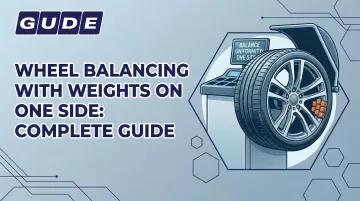
When a customer or technician sees weights only on one side of a wheel, the immediate question is: did someone cut a corner? Not necessarily. Wheel balancing with weights on one side means placing all correction weights on a single plane — either the inner or outer rim face — to resolve static imbalance, where the heavy spot exists in one rotational plane rather than across two.
Automotive service technicians, tire shop owners, and OEM professionals see this regularly. Understanding the distinction between single-plane and dual-plane weight placement is critical for delivering optimal ride quality, maximizing tire longevity, and ensuring vehicle safety at highway speeds.
Many vehicle owners assume weights on one side means incomplete service or technician error. In reality, single-plane placement is often the technically correct outcome based on balancer readings, not a shortcut. This guide covers:
- Why weights end up on one side
- How the balancing process determines weight placement
- What factors control that decision
- When single-plane correction may not be appropriate
TL;DR
- One-sided weight placement corrects static imbalance in a single rotational plane
- Balancer output determines placement—it's data-driven, not technician preference
- Placing adhesive weights on the inner rim face preserves alloy wheel aesthetics without compromising accuracy
- Dynamic imbalance requires dual-plane correction across inner and outer rim faces
- Rim geometry, weight material, and vehicle speed range all affect where weights need to go
What Is Wheel Balancing with Weights on One Side?
Wheel imbalance falls into two distinct categories:
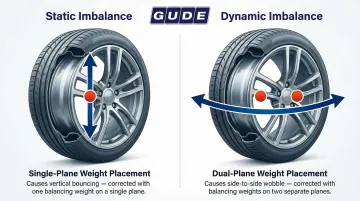
- Static imbalance — the heavy spot exists in a single plane, causing an up-and-down bouncing motion as the wheel rotates
- Dynamic imbalance — mass is distributed unevenly across two planes, producing side-to-side wobble or shimmy
One-sided weight placement is the standard correction for static imbalance. "One side" means all balancing weights are concentrated on either the inner or outer rim flange or adhesive surface, rather than split between both planes.
Single-Plane vs. Dual-Plane Balancing
This differs from dual-plane balancing, where the machine instructs the technician to place specific weight amounts at both inner and outer positions simultaneously. Single-plane correction is the technically correct approach when imbalance exists in only one plane — it's not a shortcut or a compromise.
According to ISO 1940-1 standards, static unbalance is corrected by a single weight in one plane, while dynamic unbalance requires correction in two or more planes along the shaft.
Why Technicians Place All Weights on One Side
Machine-Directed Placement
The wheel balancing machine calculates both the magnitude and plane of imbalance. When residual imbalance is confined to one plane, the machine indicates correction weight for that side only. Single-plane placement is the technically correct outcome, not a shortcut or incomplete service.
Modern balancers use piezoelectric force sensors to measure imbalance across both planes. If the outer plane reading falls within tolerance (typically 0.25 oz or 5g), the machine displays zero for that side and flags only the inner plane for correction.
Rim Geometry and Wheel Offset
Narrow wheels, certain alloy designs, and low-offset rims have a center of mass closer to one face, naturally concentrating imbalance corrections toward that side. Balancer manufacturers recommend single-plane (static) balancing specifically for narrow rims (3 inches or less).
Aesthetic Considerations for Alloy Wheels
Shops frequently use adhesive weights on the inner barrel to keep corrections invisible from the outside — a practice that works correctly as long as the balancer confirms that plane as the correction point. OEM guidelines strictly prohibit clip-on weights on the outer flanges of painted or alloy wheels to prevent finish damage and galvanic corrosion.
Common scenarios where inner-only placement applies:
- Alloy wheels where outer flange clips would damage the finish
- Premium vehicles where wheel aesthetics are a customer priority
- OEM-specified hidden placement required by vehicle manufacturer guidelines
GUDE Corp's IAW Clip-On Series weights are designed for inner edge placement on alloy rims, providing hidden positioning without sacrificing correction accuracy.
Tire Uniformity Variations
Manufacturing irregularities in the tire itself can create a concentrated heavy spot that resolves in a single plane, requiring weight only on one side. Radial Force Variation (RFV) and mass imbalance are entirely distinct properties — a perfectly balanced tire can still vibrate due to stiffness variations, not mass distribution.
After tire rotation or remount, the imbalance profile changes. What previously required dual-plane weights may now require only single-plane correction. The reverse is equally true. Either way, the balancer reading at the time of service determines correct placement — not prior history or assumption.
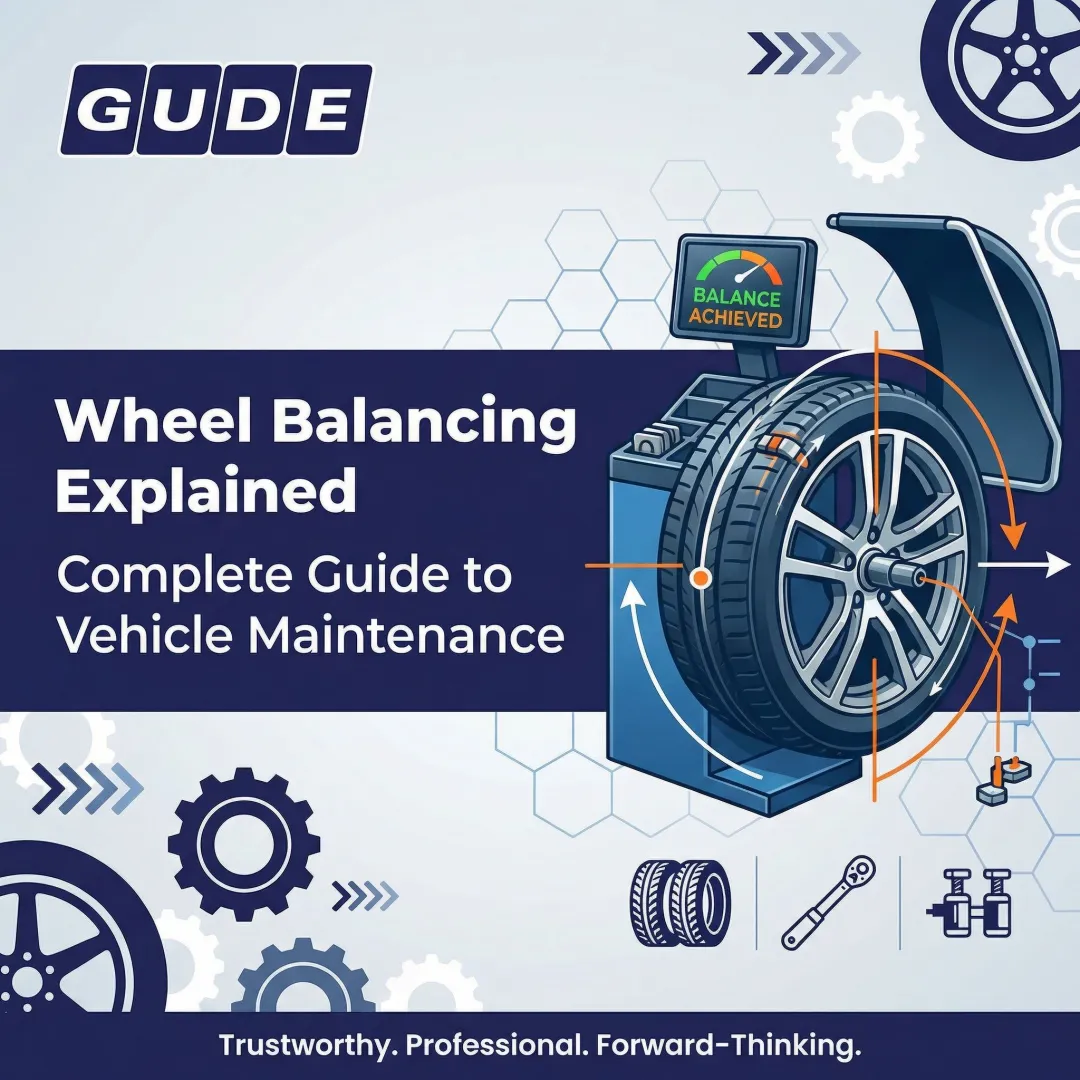
How One-Sided Wheel Balancing Works
The tire-wheel assembly is spun on a dynamic balancer, sensors measure vibration forces across both planes, and the machine outputs specific weight values and positions. When output is zero on one side, weights go only on the other.
Mounting and Spin
The assembly is mounted on the balancer spindle, rim dimensions (width, diameter, offset) are entered or auto-measured, and the assembly is spun at calibrated speed. Spin speeds vary by manufacturer—typically 100-300 RPM—to generate force data across both balancing planes.
Reading the Imbalance
The machine separates imbalance into inner and outer plane components. If the outer plane reading is within tolerance, the machine shows zero for that side and only flags the inner plane for correction, directing single-side weight application.
Balancers use the influence coefficient method and advanced algorithms to resolve centrifugal forces into two virtual planes. John Bean's VPI (Virtual Plane Imaging) technology creates a virtual plane between sensors for precise vector resolution.
Applying the Weight
The technician's decision at this step depends on rim type:
- Clip-on weights: Hammered onto the rim flange for steel or compatible alloy rims
- Adhesive weights: Applied to the clean inner barrel surface for alloy wheels
The weight is placed at the angular position indicated by the machine's display. The assembly is re-spun to verify correction falls within tolerance.

For shops running high volume, having both formats stocked in bulk keeps the workflow moving. GUDE Corp supplies both clip-on and adhesive wheel weights in lead-free coated steel — clip-on series covering standard steel, alloy, and OEM-specific rim profiles, plus adhesive options in rolls (720 pieces/roll, 0.25oz/7g segments) and boxes (144 pieces/box, 0.25oz to 1.00oz increments) for case and pallet-quantity orders.
Key Factors That Affect One-Side Weight Placement
Rim Type and Construction
Steel rims accept clip-on weights on either flange with minimal restriction. Alloy rims often require adhesive weights on the inner surface only to avoid damaging the finish.
Adhesive weights must maintain bond strength under both temperature cycling and centrifugal stress across the weight's full service life. GUDE Corp adhesive weights use permanent adhesive backing tested for year-round durability, manufactured by Toho Kogyo to ISO 9001 standards.
For alloy wheel applications, GUDE offers:
- AW Clip-On Series — fits alloy wheel rim flange geometry with a low-profile clip that avoids finish contact
- IAW Clip-On Series — mounts on the inner edge, keeping weights hidden on premium or show wheels
Balancer Calibration and Machine Accuracy
An out-of-calibration balancer can misread imbalance plane distribution and incorrectly assign all weight to one side when dual-plane correction is actually needed. ISO 9001 requirements mandate that measuring equipment be calibrated at specified intervals against measurement standards.
Without consistent calibration, even a correct single-plane decision can produce the wrong weight placement — which matters more as vehicle speed increases.
Vehicle Speed Range and Application
At highway speeds above 60 mph, even minor two-plane imbalances become perceptible. Single-plane correction works well for standard passenger vehicles, but high-speed or performance applications may require tighter tolerance dual-plane balancing regardless of machine output.
The commonly cited 0.25 oz (5–7g) acceptable residual imbalance is a balancer machine rounding default, not a formal ISO requirement. Technicians servicing performance vehicles should use "fine" or "non-round" modes measuring down to 0.05 oz (1g).
Weight Material and Profile
Low-profile adhesive weights used on the inner rim face must match the contour of the barrel. Incorrect weight profile reduces adhesion contact area, increasing detachment risk in high heat or off-road environments.
Material compliance is also a practical stocking concern. All GUDE Corp wheel weights — adhesive and clip-on — use lead-free coated steel construction, meeting state-level restrictions currently in effect in:
- California, Washington, and Maine (earliest adopters)
- Illinois, New York, Minnesota, and Maryland
Common Issues and Misconceptions About Single-Side Balancing
The "Incomplete Service" Myth
Many vehicle owners and some technicians assume weights on only one side indicate incomplete or incorrect balance. That assumption is incorrect. Single-plane placement is the direct result of machine output — not technician error or a shortcut.
Where Shops Make Genuine Errors
Errors occur when technicians apply all weights to one side by habit when the balancer actually calls for a split. The most common version of this error looks like:
- Defaulting to inner-rim placement on all weights regardless of machine output
- Ignoring a split-plane correction call and consolidating weights to one side
- Misreading the balancer's angular position, then compensating with extra weight on a single plane
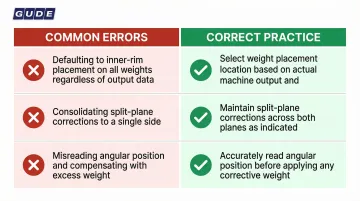
Each scenario forces the wheel into a cross-imbalance state that introduces vibration at specific speeds, even when static balance looks correct.
Why Weight Count Doesn't Reflect Balance Quality
A wheel with three weights on one side is not "more unbalanced" than a wheel with one weight on each side. Total grams of correction and their angular positioning relative to machine readings — not the number of weights or which side they're on — determine balance quality. Understanding this distinction helps both technicians and customers evaluate a balance job on its actual merits, not surface appearances.
When One-Side Balancing May Not Be Appropriate
Wide-Profile and Low-Profile Tires
Wide-profile tires (typically 50-series and lower), large-diameter performance wheels, and heavy-duty truck tires generate enough separation between mass planes that single-plane correction introduces a corrective couple imbalance.
For modern vehicles with wider tires and higher operating speeds, two-plane (dynamic) balancing is the correct approach — the balancer will show non-zero readings on both planes, confirming that single-plane correction alone won't resolve the imbalance.
Measurement Errors from Incorrect Rim Data
Physical tire geometry isn't the only reason single-plane balancing falls short — procedural errors at the machine can produce the same outcome. If a technician applies weights only to the accessible outer flange without entering correct rim offset data into the balancer, the machine cannot accurately split correction planes. What appears to be a valid one-side result is actually a measurement error with an under-corrected inner plane.
Frequently Asked Questions
Can you balance a tire from the inside of a rim?
Yes, inner-side weight placement is a standard and fully effective practice. It's particularly common for alloy wheels where adhesive weights on the inner barrel preserve the wheel's visual finish while maintaining balance accuracy.
Why are there weights inside my rims?
The technician placed them based on balancer output. Inner placement is common on alloy wheels to keep corrections hidden, or because the machine identified the inner face as the imbalance plane.
Can you balance a tire without weights?
In rare cases where a tire-wheel assembly falls within the balancer's acceptable tolerance, no weights are needed. Most assemblies have at least minor manufacturing variation that requires weight correction, so weightless balancing is the exception.
Is it normal to have wheel weights on only one side?
Yes, this is completely normal and technically correct when the balancer indicates a single-plane imbalance. It reflects an accurate machine reading, not incomplete service.
What happens if a wheel weight falls off one side?
Losing a weight creates an immediate imbalance that typically manifests as steering wheel vibration, especially at highway speeds. The wheel should be re-balanced as soon as possible to prevent accelerated tire wear and cupping.
How do I know if my wheel needs single-plane or dual-plane balancing?
This is determined entirely by the wheel balancing machine. If both inner and outer plane readings exceed the tolerance threshold, dual-plane correction is needed. If only one plane shows a reading, single-side placement is the correct approach.
For wholesale inquiries about GUDE Corp's lead-free adhesive and clip-on wheel weights—including bulk pricing, custom pallet configurations, and technical specifications—contact Jonathan McVety at jonathan@gudecorp.com or call (463) 464-5500.